
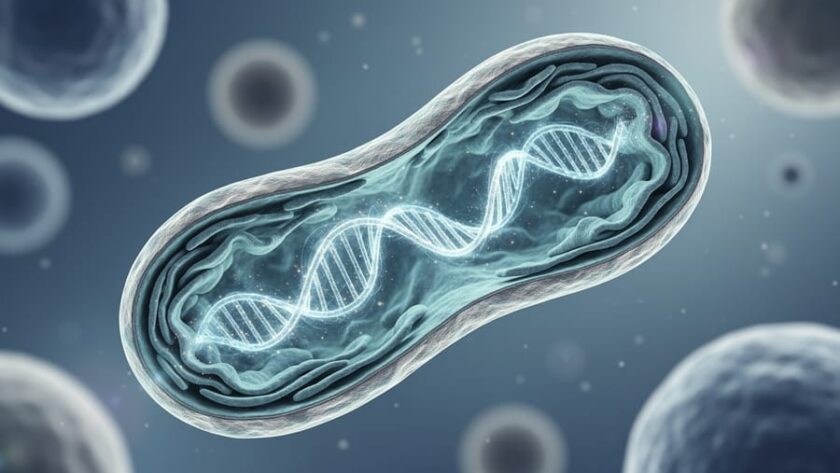
MOTS-c is a small peptide, just 16 amino acids long, that is encoded in the DNA of your mitochondria (the structures inside cells that produce energy) rather than in the nuclear genome where nearly all other proteins originate. Researchers identified it in 2015, and it has since become one of the best-known examples of a mitochondrial-derived peptide, a signaling molecule that cells make from their own power plants. A typical MOTS-c listing reflects the early lab work pointing to a role in how cells handle glucose and respond to metabolic stress, which is why MOTS-c keeps showing up in conversations about aging, exercise, and metabolism.
It also shows up in a lot of marketing, so a clear baseline matters. MOTS-c is a research compound, and what’s been shown in cells and animal studies doesn’t translate neatly into proven human benefits. If you’re comparing what’s out there, a vendor’s listing is a useful reference point for how products are described, but it’s no substitute for understanding the science and the regulatory picture.
Below, we’ll cover how MOTS-c was discovered, how it appears to work, and what it is and isn’t used for.
What MOTS-c Means: A Plain-Language Definition

MOTS-c is a short chain of amino acids made inside your cells and encoded in mitochondrial DNA. The name stands for “mitochondrial open reading frame of the 12S rRNA type-c,” which sounds intimidating but describes something fairly simple: a tiny gene tucked inside a larger gene in the mitochondria, producing a molecule only 16 amino acids long.
To make sense of that, start with mitochondria. These are small structures inside nearly every cell that convert nutrients and oxygen into usable energy. Unlike most cell parts, they carry their own small set of DNA, separate from the DNA in the cell’s nucleus. MOTS-c comes from that separate genetic code.
Next, the peptide question. Amino acids are the building blocks of proteins. A peptide is a short chain of them, while a protein is a much longer, folded chain, often hundreds of amino acids. Think of a peptide as a short message and a protein as a full instruction manual. Because peptides are small, they can act as signals, traveling between cells and tissues.
Here are the key terms you’ll see throughout this article:
- Mitochondria
- Structures inside cells that produce most of the energy cells need to function.
- Mitochondrial DNA (mtDNA)
- The small, separate set of genetic instructions carried inside mitochondria, inherited from the mother.
- Open reading frame
- A stretch of genetic code that can be read and translated into a peptide or protein.
- Mitochondrial-derived peptide
- A short peptide encoded by mitochondrial DNA that acts as a signaling molecule rather than just a structural part.
- AMPK
- A cellular energy sensor that helps regulate how cells use sugar and fat, and which MOTS-c is thought to influence.
Put together, “mitochondrial-derived peptide” means just what it says: a small signaling molecule that originates in the mitochondria. That’s the notable part. For a long time, mitochondrial DNA was thought to code only for a handful of core energy-related proteins. MOTS-c showed that this small genome also produces messengers that may help the cell coordinate its metabolism, a topic we’ll unpack in the sections ahead.
One caution before going further: MOTS-c is a real, naturally occurring molecule, but understanding what it is differs from proving what it can do for people. Much of what’s known comes from laboratory and animal research.
How MOTS-c Was Discovered and Why It Changed Mitochondrial Biology

For decades, textbooks taught a tidy rule: mitochondrial DNA is tiny, and its job is narrow. It was thought to carry the instructions for just 13 core proteins that help cells make energy, plus the RNA molecules needed to build them. Everything else about how mitochondria behave was assumed to be run from the cell’s nucleus. Mitochondria were the power plants, not the communicators.
That picture started to loosen when researchers found that short stretches of mitochondrial DNA, long dismissed as non-coding, could produce small biologically active peptides. The first well-known example was humanin, identified in the early 2000s and studied for its protective effects on cells under stress. It showed that mitochondria could make signaling molecules, not just energy machinery.
MOTS-c came next. In 2015, a research group led by Pinchas Cohen at the University of Southern California reported a peptide hidden inside the 12S rRNA gene, a section of mitochondrial DNA that had been understood only as a structural RNA component. In other words, a gene region with a known job turned out to hold a second set of instructions. The team named the peptide MOTS-c, short for mitochondrial open reading frame of the 12S rRNA type-c.
Here is a simplified view of how the field has unfolded:
- Early 2000s: Humanin is identified as the first mitochondrial-derived peptide.
- 2015: MOTS-c is reported, linking a mitochondrial peptide to metabolic regulation.
- Following years: Related peptides from the SHLP family are described, widening the category.
- Ongoing: Researchers continue to map what these peptides do and how they travel through the body.
Why does this matter? Because it reframed mitochondria as signaling organelles, meaning cell structures that send messages to the rest of the cell and possibly to distant tissues. Instead of passively producing energy on command, mitochondria may help tell the body how to adapt to stress, shifts in diet, or changes in activity. That is a meaningful change in how biologists think about cellular communication.
It’s worth keeping the significance in proportion, though. This is a young field. Most of what we know about MOTS-c comes from lab and animal work, and many questions about how it behaves in people remain open. The discovery opened a door to new research; it didn’t deliver proven treatments. Treat bold claims you see online with healthy skepticism, and rely on peer-reviewed findings as they accumulate.
How MOTS-c Works Inside the Body

MOTS-c doesn’t behave like a typical hormone with a single receptor and a single job. Researchers describe it more as a metabolic signaling molecule that helps cells adjust to changing energy demands. The picture is still being pieced together, but a few themes keep showing up.
The most discussed mechanism involves AMPK, an enzyme often called the cell’s “fuel gauge.” When energy runs low, AMPK switches on and nudges the cell toward burning stored fuel and taking up more glucose. Studies in cells and rodents suggest MOTS-c can activate this pathway indirectly. It appears to do so by interfering with folate and one-carbon metabolism, a chain of reactions cells use to build nucleotides (the building blocks of DNA) and manage methylation. Disrupting that chain causes a buildup of a compound that, in turn, triggers AMPK. In plain terms, MOTS-c seems to tweak a metabolic supply line, and the cell responds by shifting how it handles energy.
A second theme is communication between the mitochondria and the nucleus. Under stress, such as low glucose or intense exercise, MOTS-c has been observed to move from the mitochondria into the nucleus. There it appears to influence which genes are switched on, including genes involved in stress resistance and metabolism. This is a big part of why the peptide interests researchers: it suggests mitochondria can send instructions to the cell’s control center, not just take orders from it.
Downstream, the effects most often reported involve glucose and fat handling. In mouse studies, MOTS-c treatment has been linked to better insulin sensitivity, increased glucose uptake in muscle, and protection against weight gain and fatty liver on high-fat diets.
It’s worth being direct about the limits. Nearly all of the mechanistic work above comes from cell cultures and rodents. Human data is sparse and early: researchers have noted that MOTS-c levels in the blood change with age, exercise, and metabolic conditions, and a few small studies have explored these links. But showing that levels shift is not the same as proving that giving someone MOTS-c produces a particular health benefit. Mice also differ from people in metabolism and dosing, so results rarely transfer cleanly.
That gap between a compelling lab story and proven human outcomes is exactly where hype tends to creep in, which is why the next sections look at how the research is being applied and where the claims outrun the evidence.
Where MOTS-c Research Is Being Applied
MOTS-c research is real, active, and mostly early-stage. Scientists are probing it across several areas, and it helps to see what kind of evidence sits behind each one:
- Insulin sensitivity and glucose handling: mainly cell and animal studies, with mice fed high-fat diets showing improved metabolic markers.
- Obesity and fat metabolism: animal studies, where MOTS-c appears to influence how energy is stored and burned.
- Exercise physiology: early human data showing circulating MOTS-c levels shift with exercise, plus animal work on endurance and muscle function.
- Aging and age-related decline: cell and animal studies, with some observational human data on MOTS-c levels across age groups.
- Bone, heart, and inflammation pathways: largely cell and animal studies, still exploratory.
Notice the pattern. Most of the strongest findings come from lab dishes and mice, not from large human trials. A result in a mouse is a lead worth following, not proof that the same thing will work safely in people.
MOTS-c is also one piece of a broader field. Humanin, the earlier mitochondrial-derived peptide, and related molecules are being studied for how mitochondria send signals to the rest of the body. That wider work is why researchers care about MOTS-c at all: it suggests mitochondria act more like messengers than simple power plants.
Here is where hype tends to creep in. Online sellers often borrow these early findings to promise weight loss, anti-aging, or athletic gains. Those claims run well ahead of the evidence. Careful readers apply the same skepticism they’d use when reading about CBD vape ingredients: ask what the study actually tested, in whom, and at what dose.
To be direct about the status: MOTS-c is not an approved treatment for any condition. Products sold as “research peptides” are not FDA-approved, are not reviewed for safety or purity the way medicines are, and are typically labeled “for research use only.” Being studied in a laboratory is not the same as being proven, or safe, for personal use.
Safety, Regulation, and What This Means for Nicotine and Tobacco Users

Peptides sold online sit in a gray zone. MOTS-c is not an approved drug, and the “research peptides” marketed by various websites are not FDA-approved products. Many are labeled “for research use only,” which is a way of dodging the oversight that applies to medicines. That means no guaranteed dosing, no verified purity, and no standardized manufacturing checks.
Those gaps matter. Independent testing of unregulated supplements and compounds has repeatedly turned up products with the wrong concentration, contaminants, or ingredients that weren’t on the label. With an injectable peptide, a quality problem can carry real health consequences, and there’s no reliable recourse if something goes wrong. Anyone considering a peptide for any reason should talk to a qualified healthcare professional first.
If you’re a vaper or former smoker, this logic will sound familiar. We’ve covered the same pattern with unregulated vapes where products that skip oversight can’t be trusted to match their claims. It’s also why understanding FDA vaping regulations is worth your time, and why questions like flavoring safety deserve a straight, evidence-based answer. Rules also differ widely by location, so it helps to know the vaping restrictions that apply where you live.
Now the connection to tobacco and nicotine. In the broader research literature, smoking is linked to oxidative stress and mitochondrial damage in cells. It’s tempting to leap from there to “a mitochondrial peptide might help,” but that leap isn’t supported. MOTS-c has not been shown to help people quit smoking, reduce nicotine dependence, or reverse tobacco-related harm. Anyone telling you otherwise is selling something.
What does work is well established: nicotine replacement therapy, prescription cessation medications, and behavioral support, ideally guided by a doctor or a quitting program. Stick with the options that have real evidence behind them, and treat MOTS-c as an interesting area of ongoing science rather than a shortcut.
Common Questions About MOTS-c and Mitochondrial Peptides
Readers tend to ask the same handful of questions about this peptide, so here are straight answers based on what the research does and doesn’t show.
Is MOTS-c a drug or a supplement, and is it FDA-approved?
Neither, in any approved sense. MOTS-c is a research compound, and it is not an FDA-approved treatment. Products sold online as “research peptides” are not approved medicines, and they aren’t regulated like dietary supplements either.
Does the body make MOTS-c naturally?
Yes. It is encoded in mitochondrial DNA and produced inside cells, which is why it’s called a mitochondrial-derived peptide. What’s still being worked out is how natural levels change with age, exercise, and metabolic stress.
Does MOTS-c help with quitting smoking or vaping?
There’s no good evidence that it does. Nicotine and tobacco exposure are linked to mitochondrial stress in the wider literature, but that doesn’t make MOTS-c a cessation aid. Proven options like nicotine replacement therapy and behavioral support remain the better route.
Is the human research conclusive?
Not yet. Most of the mechanistic findings come from cell and animal studies, and human data is limited and early. Treat bold claims with caution.
As for how it differs from other peptides, MOTS-c is unusual mainly because of where it comes from. Most peptides you’ll read about originate from genes in the cell’s nucleus, while this one is written in the mitochondrial genome. Humanin, discovered earlier, shares that origin, but the two appear to act on different pathways. If a question isn’t answered here, a healthcare professional is the right person to ask, especially before putting any unregulated product in your body.
MOTS-c is a small peptide encoded in mitochondrial DNA, and its discovery helped change how scientists think about mitochondria. Rather than acting only as the cell’s power plants, they now look more like signaling hubs that send messages to the rest of the cell and body. That shift is a real step forward in biology.
Still, the research is young. Most of what we know about how MOTS-c works comes from cell and animal studies, and human data is limited. Promising isn’t the same as proven, and MOTS-c is not an approved treatment for anything.
Products sold online as research peptides are a separate concern. They aren’t FDA-approved, and their purity and dosing can be hard to verify.
Our aim is to give you independent, reliable information without brand bias or hype. If you’re curious about peptides, or about your health after years of smoking or vaping, talk with a qualified healthcare professional. It also pays to keep an eye on regulatory updates as this field develops.