FDA vaping regulations in 2026 operate under a premarket authorization framework that requires manufacturers to prove their products are “appropriate for the protection of public health” before they can legally be sold. The reality? Millions of vaping products have flooded the market without proper authorization, and the FDA’s recent enforcement discretion policy titled “Enforcement Priorities for Certain New Tobacco Products Marketed Without Premarket Authorization” has fundamentally shifted how the agency approaches compliance. This guidance outlines which unauthorized products the FDA will prioritize for enforcement action and which ones will receive temporary leniency, creating a complex regulatory landscape that directly impacts product availability and consumer choice.
The shift caught many by surprise. FDA staff themselves were blindsided by the policy change, which allows more electronic cigarettes and nicotine pouches to reach U.S. consumers despite lacking premarket authorization. This enforcement discretion approach doesn’t make these products legal, but it does mean the FDA will focus its limited resources on products deemed higher risk, particularly those appealing to youth or making unauthorized health claims.
For vapers, understanding this regulatory framework is essential. The FDA vaping crackdown has created an environment where your favorite products might disappear overnight or new options could suddenly become available. Whether you’re transitioning from traditional cigarettes or already an experienced vaper, knowing which products have proper authorization, what enforcement discretion means in practice, and how these regulations affect your purchasing decisions can help you make informed choices in a rapidly evolving market.
Understanding the FDA’s Current Vaping Regulatory Framework
The Premarket Tobacco Product Application (PMTA) Process
A Premarket Tobacco Product Application is the FDA’s gateway requirement for any vaping product wanting legal market access in the United States. Under the FDA Tobacco Control Act basis manufacturers must demonstrate that their product is “appropriate for the protection of public health” before it can be marketed. This means submitting extensive scientific evidence covering everything from product design and ingredients to toxicology studies and marketing plans.
The process requires manufacturers to prove their specific product formulation, including exact nicotine levels, flavorings, and device specifications, meets FDA standards. Each variation of a product, whether a different flavor or nicotine strength, needs its own application. The agency reviews whether the product’s potential benefits to adult smokers switching from combustible tobacco outweigh the risks of youth initiation and addiction.
For most vaping companies, especially smaller manufacturers, the PMTA process has been a financial and technical nightmare. Applications can cost hundreds of thousands to millions of dollars per product, requiring lab testing, clinical studies, and legal expertise that many businesses simply can’t afford. The scientific evidence demands are rigorous, forcing companies to conduct long-term studies and compile massive documentation packages.
This burden has fundamentally reshaped the industry. Thousands of products disappeared from the market because their manufacturers couldn’t navigate or afford the process. Small and mid-sized companies faced an impossible choice: invest resources they didn’t have or exit the market entirely. Even those who submitted applications faced years of uncertainty waiting for FDA review, creating a regulatory bottleneck that’s left the market in flux and consumers with fewer options than before the requirement took effect.
Why FDA Authorization Matters for Vapers
FDA authorization isn’t just a regulatory formality, it directly determines which vaping products you can legally buy and whether your favorite e-liquid or device will remain available. When a manufacturer receives authorization through the PMTA process, their product gains legal market access. Without it, the product exists in regulatory limbo and faces potential enforcement action that can pull it from shelves overnight.
This matters for your daily vaping experience in concrete ways. Authorized products have passed FDA review demonstrating that their marketing meets the public health standard, which means they’ve survived scrutiny and can stay on the market. Products without authorization operate on borrowed time. While some continue selling under the new enforcement discretion policy, they carry inherent uncertainty, the FDA could target them for removal at any point, leaving you scrambling to find alternatives.
The authorization status also shapes your product choices significantly. Many innovative devices, flavor options, and nicotine formulations never made it through the PMTA gauntlet due to cost or complexity. Others submitted applications but received denial orders. The result is a narrowed marketplace compared to vaping’s earlier years. When you walk into a vape shop today, the selection reflects not just consumer demand but regulatory survival. Products that manufacturers couldn’t or didn’t get authorized have disappeared or face ongoing removal risk, limiting the variety of hardware features, flavor profiles, and nicotine strengths you can access.
The New Enforcement Discretion Policy: What Changed
What the Final Guidance Actually Says
The FDA enforcement priorities policy establishes a selective approach to enforcing premarket authorization requirements. Rather than pursuing all unauthorized products equally, the agency now prioritizes enforcement based on specific risk factors and market conditions.
The guidance targets products that pose the greatest public health concern. Unauthorized vaping products marketed to or used by youth remain the FDA’s top enforcement priority, particularly those with youth-appealing flavors, packaging, or marketing strategies. Products that make modified risk claims without authorization also face immediate enforcement action.
Here’s what it means for products outside these high-priority categories: the FDA will exercise enforcement discretion on a case-by-case basis. Manufacturers whose products don’t trigger immediate enforcement action aren’t receiving approval or authorization. They’re simply not facing active enforcement while the agency allocates its resources toward higher-risk products.
The policy covers both electronic cigarettes and nicotine pouches, recognizing that multiple product categories exist in the market without authorization. For a product to benefit from enforcement discretion, it generally must not target youth, must come from a manufacturer engaged with the PMTA process, and shouldn’t present novel public health questions that demand immediate regulatory action.
This discretionary approach doesn’t create a legal pathway for unauthorized products. Manufacturers still need to submit PMTAs and receive authorization to market products legally. Enforcement discretion is temporary forbearance, not regulatory approval, and the FDA retains the right to enforce requirements at any time if public health concerns emerge.
Why This Policy Shift Happened
The policy shift represents a dramatic departure from the FDA’s previously stringent enforcement approach, and the circumstances surrounding it reveal significant tension between regulatory ideals and market realities. Industry stakeholders had long argued that the agency’s pace of PMTA reviews couldn’t keep up with the massive number of applications, creating a situation where potentially millions of products faced enforcement action despite pending applications.
The practical impossibility of removing thousands of products from the market while maintaining any semblance of consumer choice appears to have forced the FDA’s hand. The agency faced mounting criticism that its slow authorization process was inadvertently benefiting illicit products while punishing legitimate manufacturers attempting to comply. Market dynamics showed that strict enforcement without sufficient authorized alternatives would simply push vapers toward unregulated sources rather than eliminate vaping.
What makes this shift particularly notable is how FDA staff were blindsided by the policy change. The fact that agency personnel learned about the enforcement discretion guidance alongside the public suggests the decision came from higher administrative levels, possibly reflecting political pressure or strategic recalculation about regulatory feasibility. This internal surprise indicates the policy wasn’t the result of gradual agency consensus but rather a swift course correction.
The timing and manner of the announcement signal recognition that the previous approach had become unsustainable, forcing a compromise between the agency’s public health mission and the realities of regulating a massive, established market.
How These Regulations Affect Product Availability
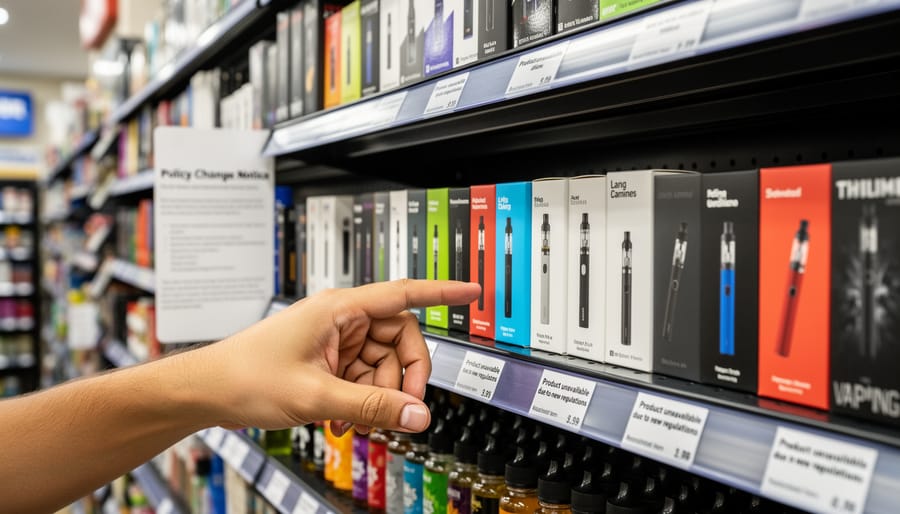
Impact on E-Liquid and Device Selection
The enforcement discretion policy creates a more permissive environment for e-liquid variety and device availability than strict PMTA compliance would allow. While the FDA hasn’t authorized most products on the market, manufacturers now have breathing room to continue offering diverse options without immediate enforcement action.
For e-liquids, this translates to sustained access to a wider range of flavors beyond tobacco and menthol, though the FDA’s long-term stance on flavored products remains uncertain. Nicotine strength options should remain varied, from low-concentration formulas for casual users to higher-strength salt nicotine products preferred by former smokers. The policy doesn’t explicitly endorse any specific flavor profiles or concentrations, but it delays enforcement that would have eliminated many choices.
Hardware selection benefits similarly. Pod systems, refillable tanks, disposable devices, and advanced mods can all remain available under enforcement discretion, provided they don’t trigger other compliance issues. This means consumers retain access to both beginner-friendly closed systems and customizable open platforms that experienced vapers prefer.
The caveat is uncertainty. Products under enforcement discretion aren’t approved, they’re simply not prioritized for removal. Manufacturers may hesitate to invest in new product development or wide distribution without formal authorization, potentially limiting innovation. Additionally, the FDA could narrow its discretion at any time, particularly for products it deems problematic. The current market reflects a temporary equilibrium rather than a stable regulatory resolution.
What Happens to Unauthorized Products
The FDA’s enforcement discretion policy creates two distinct categories of unauthorized products in the current market. Products receiving enforcement discretion remain technically unauthorized but face no immediate regulatory action, the FDA has explicitly deprioritized enforcement against them, allowing them to stay on shelves. These products can continue selling while the agency focuses limited resources elsewhere. Conversely, products facing active enforcement are those the FDA has specifically targeted through warning letters, seizures, or marketing denial orders. The agency continues pursuing these aggressively, particularly products that appeal to youth or make unsubstantiated health claims.
For vapers, the practical difference is significant. Products under enforcement discretion remain available through normal retail channels, while those facing active enforcement disappear from legitimate vendors or signal serious compliance issues. Retailers selling actively targeted products risk their own enforcement action.
Identifying compliant products requires checking whether they’ve received official FDA authorization through the premarket tobacco product application process. Authorized products carry specific markings and appear on the FDA’s publicly available list of marketing orders. Beyond authorized products, determining which unauthorized items fall under enforcement discretion versus active enforcement is less transparent, the FDA doesn’t publish a comprehensive safe list. Watch for FDA warning letters posted publicly, which identify specific products and manufacturers under enforcement. Products from manufacturers who’ve received denial orders should be avoided entirely. When purchasing, choose established retailers who track regulatory status and remove flagged products promptly, reducing your exposure to items the FDA is actively removing from market.
What Vapers Need to Know Right Now

With the FDA’s enforcement discretion policy creating uncertainty in the vaping market, knowing how to verify product legitimacy has become more critical than ever. Here’s what you need to focus on as a consumer right now.
First, understand that just because a product is available for purchase doesn’t automatically mean it’s fully authorized by the FDA. Under the new enforcement discretion guidance, some products are being allowed to remain on the market while technically lacking formal authorization. This creates a gray area where legitimate products exist alongside potentially non-compliant ones. When shopping for devices like a JUUL starter kit or any e-liquid, prioritize retailers who clearly communicate their products’ regulatory status.
Look for transparency from manufacturers and sellers. Reputable companies typically make their compliance status visible, whether through packaging disclaimers, website information, or retailer communications. If a vendor can’t or won’t provide clear answers about a product’s authorization status, that’s a red flag worth heeding.
Pay attention to where you’re buying. Established retailers with reputations to protect are more likely to carry products that fall within FDA guidelines, whether authorized or under enforcement discretion. Avoid suspiciously cheap products from unknown sources, especially those marketed with health claims or appearing to target minors, as these are most likely to face enforcement action.
Finally, stay informed about ongoing regulatory changes. The enforcement discretion policy itself surprised industry insiders, demonstrating how quickly the landscape can shift. Following trusted vaping news sources and advocacy organizations will help you understand what’s happening and how it might affect your product choices in the months ahead.
Common Questions About FDA Vaping Regulations
Are devices without authorization illegal to buy?
Not necessarily. The FDA’s enforcement discretion policy outlined in their recent guidance titled “Enforcement Priorities for Certain New Tobacco Products Marketed Without Premarket Authorization” means products without premarket authorization can remain available while the agency focuses enforcement resources elsewhere. This doesn’t make them FDA-authorized, but it means they’re less likely to face immediate enforcement action. The policy created breathing room for many products that vapers regularly use, though the FDA retains authority to act on any unauthorized products that pose clear risks or violate other tobacco control standards.
Can I still buy my favorite e-liquid?
If it’s currently on the market, the enforcement discretion policy means it will likely remain available for now, even without premarket authorization. The FDA’s statement of policy outlines enforcement priorities rather than immediately removing products.
What does enforcement discretion mean for me as a vaper?
It means the FDA won’t prioritize enforcement against certain unauthorized products, so you’ll continue to see variety in flavors and devices. Your shopping experience remains largely unchanged from what it was before this policy clarified the agency’s approach.
How do I know if a product is legally marketed?
Truly authorized products will carry FDA marketing authorization, but under current enforcement discretion, many products without formal authorization remain legally available. Reputable retailers stock compliant products that meet the policy criteria.
Will more products become available under this policy?
The policy primarily affects products already marketed rather than opening floodgates for entirely new offerings. Manufacturers still face regulatory requirements, though enforcement priorities have shifted in ways that surprised even FDA staff when the policy change was announced.
What happens if the policy changes again?
FDA regulations continue evolving as the agency balances public health goals with market realities. The enforcement discretion approach represents current priorities, but future guidance could tighten or modify these standards. Staying informed about regulatory developments helps you understand what to watch as policies shift. Reputable retailers and advocacy groups typically announce significant changes that affect product availability, so following trusted information sources keeps you ahead of regulatory curveballs that impact your vaping choices.
The FDA’s recent enforcement discretion policy represents a significant shift in how vaping regulations will impact the market, though the full implications are still unfolding. This new guidance, formally titled “Enforcement Priorities for Certain New Tobacco Products Marketed Without Premarket Authorization”, creates more breathing room for certain products while maintaining the fundamental requirement for premarket authorization. The policy surprised even FDA staff, highlighting just how quickly the regulatory landscape can change.
For vapers, this means continuing uncertainty about long-term product availability alongside short-term stability for many products currently on shelves. The regulatory framework remains complex, with enforcement priorities that may evolve as the FDA gathers more data and responds to market conditions. What’s clear is that staying informed isn’t optional, it’s essential for making smart purchasing decisions and understanding which products meet regulatory standards.
We’re committed to tracking these developments independently and translating regulatory changes into practical guidance. As FDA policies continue to evolve, we’ll keep you updated on what matters most: how regulations affect your access to the products you rely on and what you need to know to navigate this shifting landscape confidently.